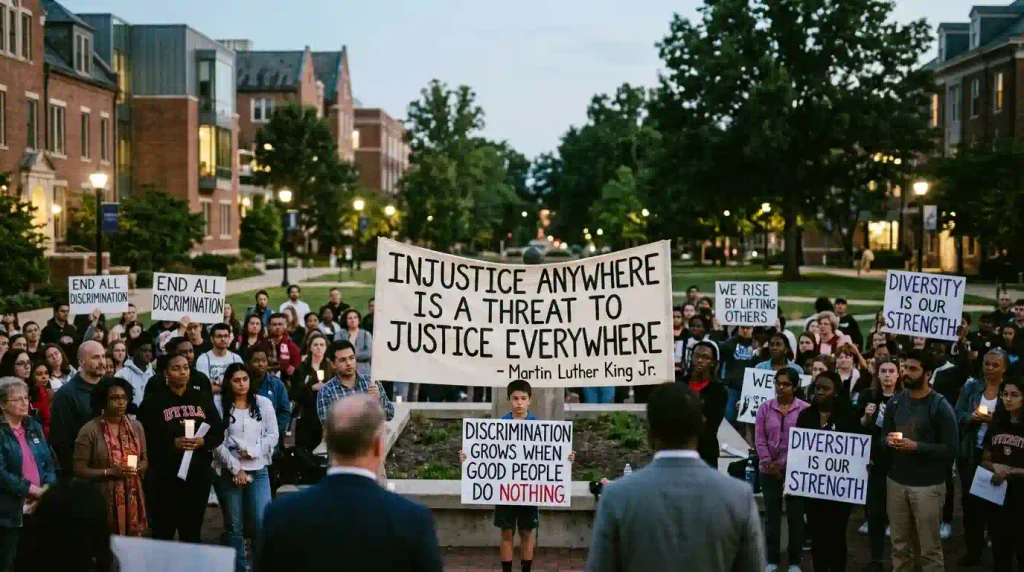

Discrimination quotes can put difficult feelings into simple words, whether you want a thoughtful caption, an awareness post, a message about equality, or a reminder to treat people with dignity. This collection includes original quotes about unfair treatment, prejudice, courage, inclusion, respect, and the importance of seeing people as individuals rather than stereotypes. Some are serious, some are short and direct, and others are designed to make someone pause and think.
Discrimination can show up in obvious ways, but it can also hide in assumptions, exclusion, jokes, labels, or decisions made without knowing the person behind them. A few carefully chosen words can help start a conversation without turning every message into a lecture.
Use these quotes for social media captions, classroom discussions, awareness campaigns, presentations, text messages, posters, or personal reflections. Pick the tone that matches your purpose, then let the words do their work.
Powerful Discrimination Quotes About Equality ⚖️
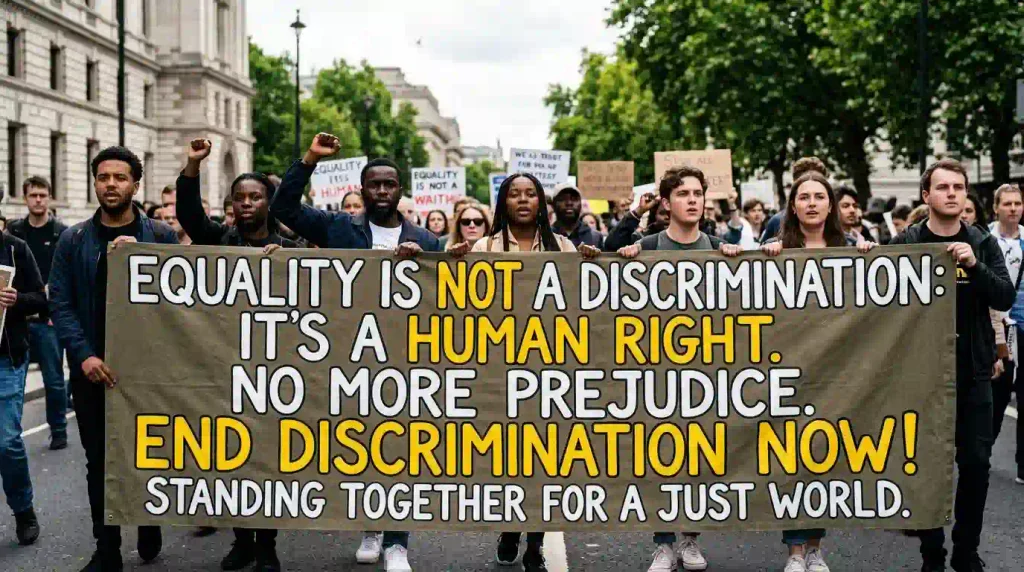
These quotes focus on equality and the idea that every person deserves fair treatment. They work well for awareness posts, school projects, social media captions, and messages that encourage people to look beyond differences.
- Equality begins when assumptions lose their power.
- Fairness means giving people room to be themselves.
- Different stories can still deserve equal respect.
- Nobody should earn dignity by fitting a mold.
- Equality sees people before it sees categories.
- A fair world leaves no one outside.
- Respect should never depend on resemblance.
- Human worth does not come with conditions.
- Fair treatment should never be a special favor.
- Equal dignity belongs to every person.
- Differences add color, not lesser value.
- Justice starts with seeing everyone clearly.
- No label can measure a person’s worth.
- Equality makes room for every voice.
- Treat people fairly, even when they’re unfamiliar.
Equality is not about pretending everyone has identical experiences. People come from different backgrounds, cultures, families, communities, and circumstances. The point is that difference should not become an excuse for disrespect or unfair treatment.
For a caption, a short line usually works best. For an awareness post or presentation, choose something that opens the door to a larger conversation rather than trying to say everything in one sentence.
Short Discrimination Quotes for Captions 📱
Sometimes you need only a few words. These short discrimination quotes are made for Instagram captions, Facebook posts, status updates, profile bios, posters, and quick messages. They are direct without being overly dramatic.
- Bias blocks the view of real people.
- Choose understanding over assumptions.
- Difference is not a defect.
- Respect everyone. Always.
- See the person, not the label.
- Kindness has no category.
- Judge less, understand more.
- Bias shrinks when curiosity grows.
- Let people define themselves.
- Labels never tell the whole story.
- Fairness looks good on everyone.
- Stereotypes are shortcuts with consequences.
- Inclusion begins with an open mind.
- Dignity needs no explanation.
- Humanity comes before every label.
Short captions are especially useful when your image already communicates part of the message. You do not need a long paragraph underneath every photograph, graphic, or video.
Try pairing a concise quote with an image that supports its meaning. A simple design with clear typography can often make a short statement more memorable than a crowded graphic filled with text.
You can also personalize these lines. For example, change the wording slightly to fit a workplace post, school project, friendship message, or awareness campaign. The goal is to sound natural rather than like you copied a slogan.
Discrimination Quotes About Prejudice and Bias 🧠
Prejudice often starts before someone has enough information to understand another person. These quotes focus on assumptions, stereotypes, labels, and the habit of judging people too quickly.
- Prejudice decides before curiosity gets a chance.
- Assumptions can build walls without bricks.
- A stereotype is never someone’s complete story.
- Bias asks for less thought and more judgment.
- First impressions should not become permanent verdicts.
- Prejudice turns difference into distance.
- Curiosity can challenge what bias teaches us.
- Never confuse familiarity with truth.
- A label can hide the person wearing it.
- Judging quickly can mean understanding poorly.
- Stereotypes simplify people and complicate lives.
- Ask questions before making conclusions.
- Bias grows wherever curiosity is ignored.
- Someone’s background cannot predict their character.
- Unlearning prejudice begins with honest reflection.
These quotes can fit conversations about racial discrimination, gender bias, age discrimination, disability discrimination, religious prejudice, cultural stereotypes, and other forms of unfair judgment. They can also work when discussing everyday assumptions that may seem harmless but still affect how people are treated.
A useful caption does not always need to accuse someone. Sometimes a thoughtful question or observation can encourage reflection without creating unnecessary conflict. If your goal is awareness, choose wording that invites people to think about their own assumptions.
For educational settings, pair a quote with a short explanation or discussion question. That gives the words context and encourages people to move beyond simply liking or sharing a post.
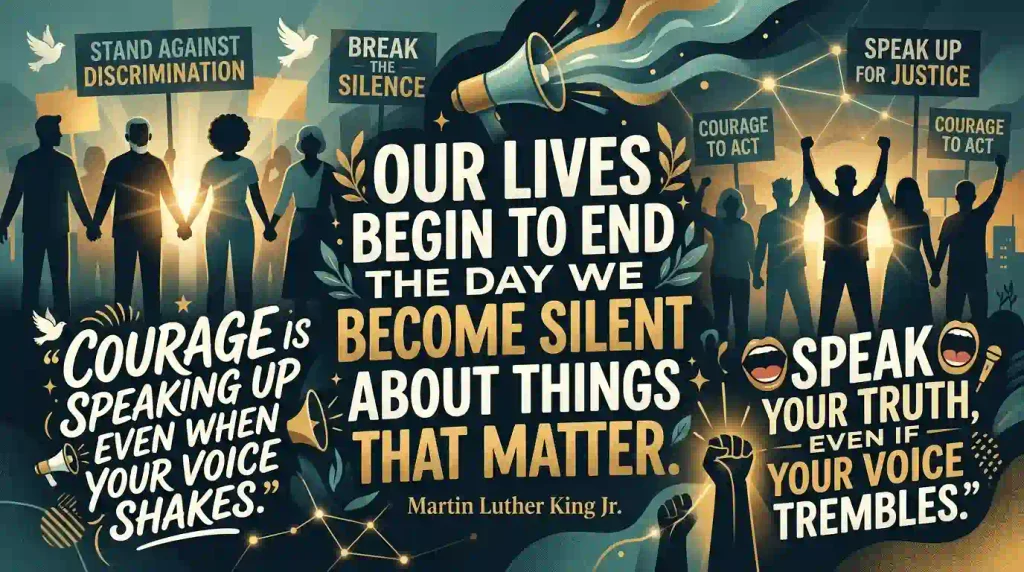
Discrimination Quotes About Courage and Speaking Up ✊
Remaining silent can feel easier when discrimination happens around you. These quotes are about courage, standing up for others, challenging unfair behavior, and using your voice thoughtfully.
- Courage speaks when silence protects the wrong thing.
- Stand beside people when fairness needs support.
- A quiet voice can still challenge injustice.
- Speaking up can begin with one honest sentence.
- Do not normalize what harms someone’s dignity.
- Courage means refusing to laugh at cruelty.
- Defending fairness does not require a perfect speech.
- Sometimes respect means saying, “That isn’t okay.”
- Be brave enough to question unfair treatment.
- Your voice can make exclusion harder to ignore.
- Speaking up can give courage to someone listening.
- A small objection can interrupt a harmful habit.
- Stand for people, especially when they’re absent.
- Silence may be comfortable, but fairness needs action.
- Choose the courage to challenge unfair assumptions.
These quotes are useful when you want to encourage respectful action. They can work in workplace discussions, school campaigns, community posts, or personal messages.
Speaking up does not always mean starting an argument. It can mean correcting an unfair assumption, refusing to participate in a hurtful joke, making space for someone else’s voice, or asking why a decision was made.
If you are posting about a real situation, consider the audience before choosing your wording. A calm, specific message can sometimes create more room for discussion than an aggressive caption.
Discrimination Quotes About Respect and Inclusion 🤝
Respect goes beyond simply avoiding unfair treatment. Inclusion means making room for people to participate, contribute, and be treated as valued members of a group. These quotes capture that idea from different angles.
- Inclusion means nobody has to disappear to belong.
- Respect makes differences easier to understand.
- A welcoming space leaves room for every voice.
- Belonging begins where judgment ends.
- People should not shrink themselves to fit in.
- Inclusion is more than opening the door.
- Respect listens without demanding sameness.
- Make room for people, not just appearances.
- A diverse room needs more than empty chairs.
- Belonging feels different when everyone gets heard.
- Respect does not require complete agreement.
- Inclusion grows when curiosity replaces discomfort.
- Everyone deserves space to participate fully.
- Differences can coexist without becoming divisions.
- A kind welcome can change someone’s whole experience.
These quotes are particularly useful for posts about inclusive communities, schools, workplaces, friendships, teams, and online spaces.
If you are writing a caption for an inclusion campaign, choose a line that reflects the action you want people to take. A quote about listening may fit a discussion about representation, while a quote about belonging may work better for a community event.
You can also use these lines in presentations or posters. Keep the design simple and make sure the quote remains easy to read from a distance.
Discrimination Quotes About Hope, Change, and a Better Future 🌍
Conversations about discrimination can become heavy, but they do not have to end there. These quotes focus on learning, growth, change, and the possibility of creating environments where people are treated with greater fairness and understanding.
- Change begins when unfair habits stop feeling normal.
- Hope grows when people choose better actions.
- A fairer future starts with today’s choices.
- Progress begins with noticing what needs changing.
- Better understanding can replace inherited assumptions.
- Every respectful choice helps shape a culture.
- Change becomes possible when people stay willing to learn.
- Tomorrow can be kinder than yesterday.
- Awareness matters when it leads to action.
- Old assumptions do not deserve permanent loyalty.
- A better culture begins with everyday behavior.
- Hope needs hands willing to build it.
- Learning can turn discomfort into understanding.
- Small changes can reshape how people feel included.
- The future improves when fairness becomes ordinary.
These quotes work well for positive awareness posts because they leave readers with something constructive. They can also be useful at the end of presentations, school assignments, community events, or social campaigns.
When choosing a hopeful quote, think about the message you want readers to remember after they finish your post. A strong ending does not need to promise that every problem will disappear. It can simply remind people that choices, habits, and attitudes can change.
That balance can make an awareness message feel encouraging without ignoring the seriousness of discrimination.
How to Choose the Right Discrimination Quote
The best quote depends on what you are trying to say. A short caption may need only four or five strong words, while a serious awareness post may benefit from a line that encourages reflection.
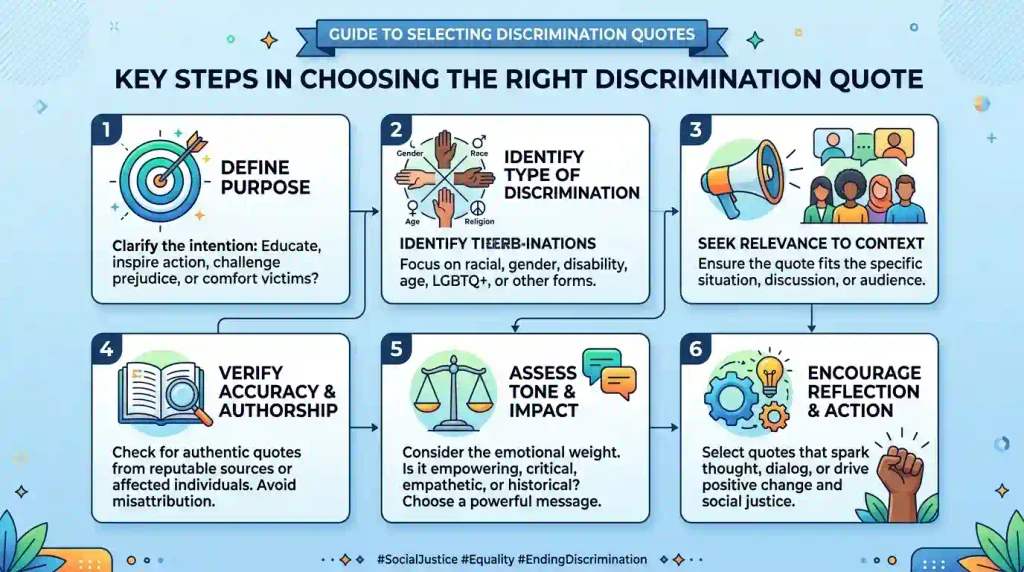
For social media: Choose something short and easy to understand. Quotes such as “See the person, not the label” work well when the image carries much of the context.
For awareness campaigns: Pick a statement connected to fairness, inclusion, or action. Avoid making the message so complicated that readers miss the central point.
For school or workplace use: A thoughtful quote about assumptions, respect, or belonging can open a useful conversation. You can add a question underneath it to encourage discussion.
For a personal message: Consider the person’s situation. A gentle line about understanding may be more appropriate than a forceful statement about injustice.
For posters: Keep the text brief and visually clear. The quote should be readable without requiring people to stand close to the design.
The strongest choice is usually the one that sounds natural in the setting. You do not need the most dramatic sentence. You need the sentence that communicates your intended message clearly.
Frequently Asked Questions About Discrimination Quotes
What are discrimination quotes?
Discrimination quotes are short statements about unfair treatment, prejudice, bias, equality, respect, inclusion, and human dignity. People commonly use them for captions, awareness posts, messages, presentations, and personal reflection.
What is a good short quote about discrimination?
A simple option is: “See the person, not the label.” It communicates the idea that people should not be reduced to assumptions or categories.
Can I use discrimination quotes as Instagram captions?
Yes. Short discrimination quotes can work well as Instagram captions, especially when paired with an image related to equality, inclusion, respect, or awareness. Choose a line that matches the tone of your post.
What quote can I use for an anti discrimination post?
A direct option is: “Difference is not a defect.” Other useful choices focus on fairness, dignity, challenging stereotypes, or making people feel included.
What is the difference between prejudice and discrimination?
Prejudice generally refers to preconceived judgments or attitudes toward people, while discrimination refers to unfair treatment or behavior. The two can be connected, but they describe different things.
How can I make a discrimination quote more personal?
Choose a quote that reflects the specific situation, then add a short personal sentence explaining why it matters to you. Keep the wording genuine rather than trying to make the message sound overly dramatic.
Where can I share discrimination quotes?
You can share them on social media, in presentations, classroom materials, awareness campaigns, posters, blogs, newsletters, or private messages. The appropriate wording depends on your audience and purpose.
Final Thoughts
The right discrimination quote can say a lot without saying too much. A few honest words about fairness, respect, courage, or inclusion can make someone pause and reconsider an assumption.
Choose the line that fits your message, whether you need a social media caption, an awareness statement, a thoughtful status, or a simple reminder about human dignity. Then share it with purpose. Sometimes one clear sentence is enough to start a much bigger conversation.